A Time, a Place, Our Gaze: Re-framing the Subaltern
Photography provoked a cataclysmic rupture in the representational field of Western imperialism. This is not hyperbole. Most people fail to recognize that the colonial archive left behind by western empires during their violent incursions into the Americas were not merely documentary – a written and printed paper trail. It was also simultaneously, and often dominantly visual. Not a mere mirror on a fixed society, art and visual culture produced and solidified the colonial logic that underpinned slavery’s perverse racial hierarchy and helped to structure a society in which it became normal and legal to buy and sell enslaved African people as chattel.
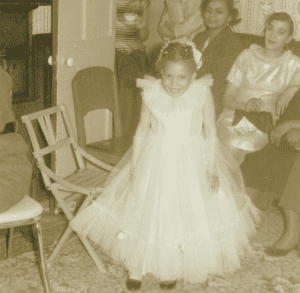
Fig. 1
Enslaved Africans were not just brutalized by corporal punishment, sexual violence, and psychological terror, they did not have the time, materials, or the cultural capital to create (or even to desire to create) most “high” art forms. Invented after the first quarter of the nineteenth century, photography dramatically challenged the established representational regime by shredding its economic and social norms.
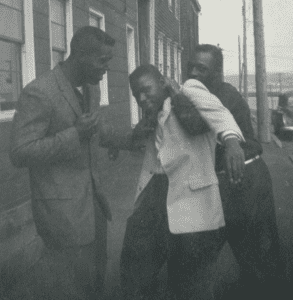

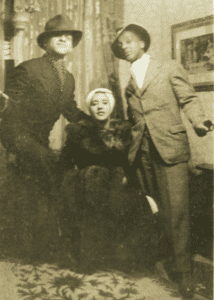
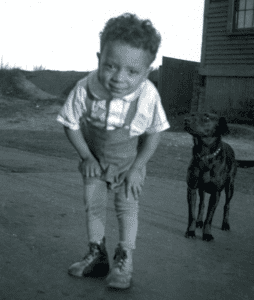
The photographs that Kenneth Scott has assembled in this groundbreaking exhibition are the result of this technological advance that provoked a cataclysmic representational rupture and their power resides in the fact that they represent black individuals and communities through a black photographic lens that refused the mainstreamed white racist vision. Instead, we see loving family congregations (Fig. 1), intimate gatherings, playful moments (Fig. 2), weddings (Fig. 3), happy families, elegant black individuals, couples, and groups poised and shining (Figs. 4 & 5), and precious black children enjoying moments of play. (Fig. 6)

New England will surely provide fruitful ground for viewers to pose provocative questions that open new conversations and insights about how the earth-shifting technology of photography transformed the field of representation for black individuals and communities for the better.
Exhibition Catalogue:
Available from Black Maple Magazine Publishing, February 2026
Sponsored, Mounted, and Presented by: Slavery North
Exhibition:
A Time, a Place, Our Gaze: Re-framing the Subaltern
Dates:
29 January to 12 April 2026
Venue:
50 Arrow Gallery
116 Pleasant St, Suite 244
Eastworks Building
Easthampton, MA, USA
01027
Monday-Friday 10am – 5pm
Saturday, Sunday 12pm – 4pm
50 Arrow Gallery Contact:
Tel: (860) 214-6214
Email: info@50arrowgallery.com
Slavery North Contact:
Roxanne Cornellier, Director of Curriculum and Outreach
Email: rcornellier@umass.edu